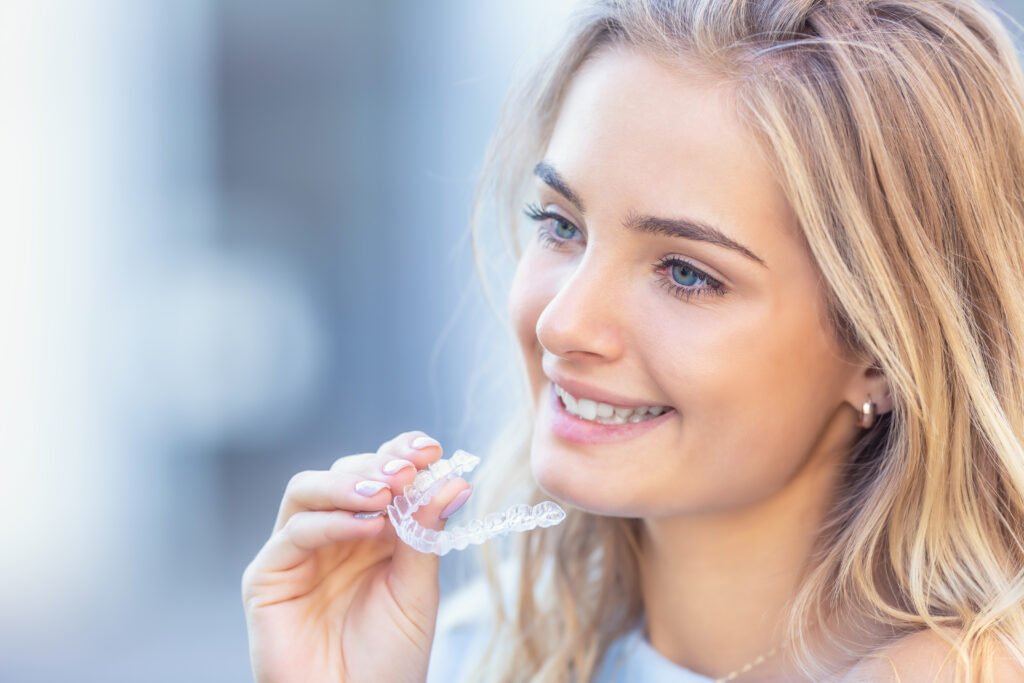
Invisalign is a clear aligner system for straightening teeth, and some people choose it instead of braces. Your dentist scans your teeth, and a lab makes a series of custom plastic trays. Each tray moves your teeth slightly until they reach the planned position. This is how Invisalign compares with traditional braces in four everyday areas:
Removable Design
You take Invisalign trays out when you eat, brush, or drink anything besides water. Braces stay bonded to your teeth for the full treatment, so certain foods are off-limits. When using braces, dentists may advise patients to avoid these foods:
- Popcorn and hard nuts
- Candy, caramel, and taffy
- Corn on the cob and whole apples
- Pretzels and crusty bread
Removability comes with a responsibility. Invisalign works well when you wear the trays at least 22 hours each day. Store them in their case during meals, or they may get lost or damaged. Many patients set phone reminders to put their trays back in after eating.
Increased Comfort
Traditional braces use metal brackets that attach to the front of each tooth. These brackets sometimes rub against your cheeks and lips. Patients can use orthodontic wax for relief, but sore spots may still form. Wires may also poke the inside of your mouth if they shift.
Invisalign trays have smooth edges, and they sit snugly over your teeth. Since there are no brackets or wires, nothing sharp sits against your cheeks. Patients typically feel some pressure for a day or two after each tray change.
Adjustment visits look different too. With braces, your orthodontist tightens wires during regular visits, which may leave your mouth tender for several days. Invisalign patients receive new trays at checkups, so these visits involve fewer hands-on adjustments.
Clear Appearance
Metal braces are easy to spot, and colored bands make them stand out even more. Invisalign uses clear plastic trays that fit closely over your teeth. Many people won’t notice them during a normal conversation. People may still see the trays up close, especially if coffee or tea stains them.
Some treatment plans add small tooth-colored bumps, which dentists call attachments. These bumps help the trays grip and move specific teeth. They blend in with your enamel, and your dentist removes them after treatment. Many adults and teens choose clear aligners before weddings, school photos, or job interviews.
Easier Brushing and Flossing
Brackets and wires trap food around your teeth. Brushing takes longer with braces, and flossing requires a threader or special floss. If plaque stays near the brackets, white spots or gum swelling may develop. With Invisalign, your daily routine looks closer to normal:
- Remove your trays before you brush and floss.
- Brush and floss your teeth as usual.
- Rinse the trays and brush them gently with a soft toothbrush.
- Place the trays back on clean teeth.
Since you brush before putting the trays back in, less food stays trapped against your teeth. Clean trays look clearer, and they also stay fresher. Your dentist will show you a full cleaning routine at your first fitting.
Book a Visit for Invisalign
Invisalign isn’t suitable for every case, and some bite problems still respond better to braces. During your visit, the dentist checks your teeth and explains which option fits your needs. Bring your insurance card and a list of questions to your appointment, and ask how long treatment may take and what your insurance plan covers. You can book online at any time, or you can call a dental clinic.
- How To Prepare for Your Joint Injection Appointment
- Benefits of Using Invisalign Over Braces
- Why Medical AI Needs Diverse, Ethically Sourced Medical Imaging Data (and How to Get It)
- Sewer Backup Cleanup Companies: A Homeowner’s Guide for Emergencies
- The Role of Family Dentistry in Maintaining Oral Health