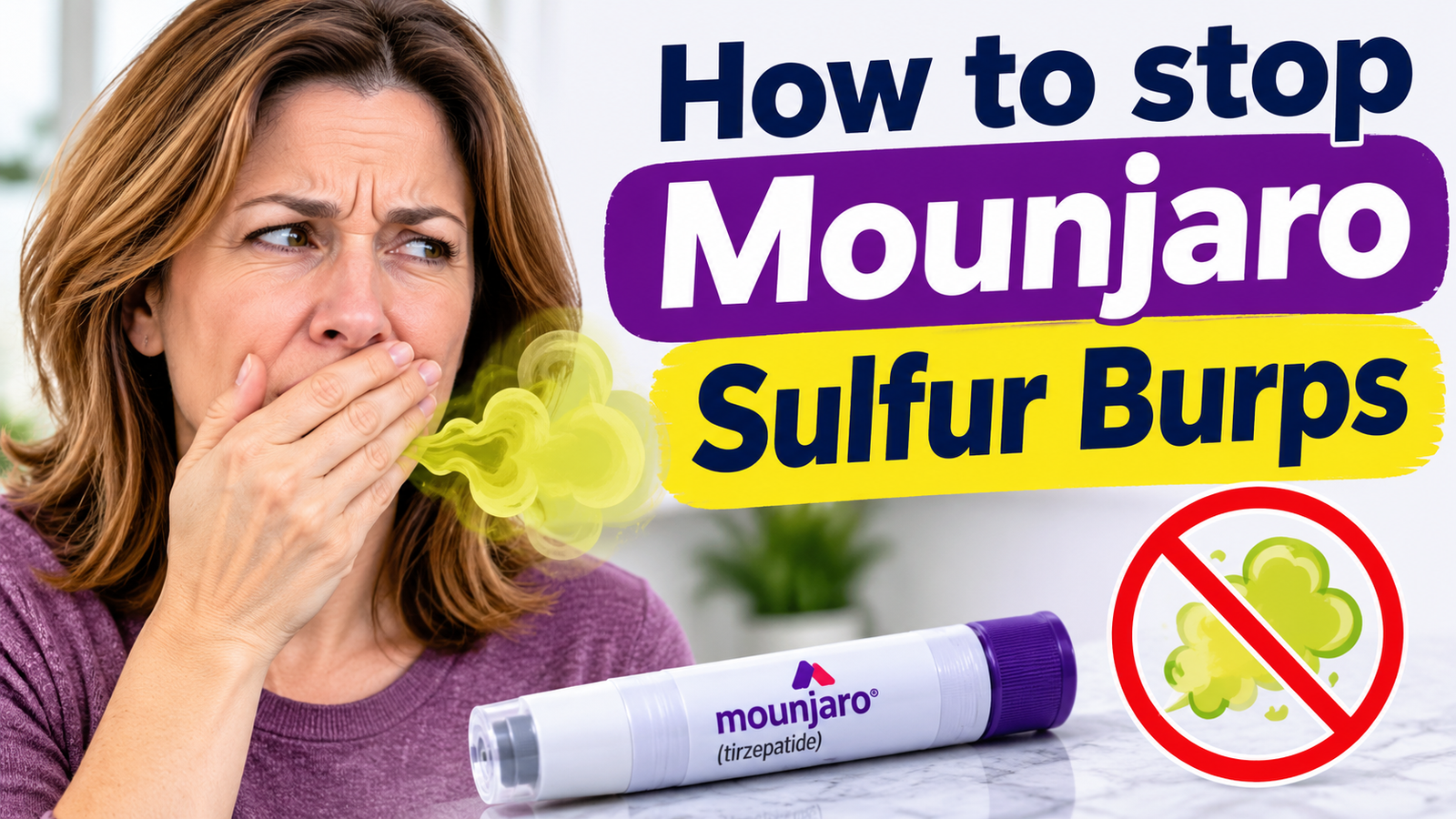
Mounjaro works. It slows gastric emptying, curbs appetite, and helps you lose weight – but that same mechanism is responsible for one of the most unpleasant side effects users report: sulfur burps. If you’ve ever dealt with that rotten-egg belch in the middle of a meal or, worse, a conversation, you know it’s not something you can just push through and ignore. The good news is that Mounjaro sulfur burps aren’t random. They follow predictable patterns tied to what you eat, when you eat, and how your gut responds to tirzepatide. Once you understand those patterns, you can actually do something about them. This article walks through the root causes and gives you concrete, practical steps to reduce or stop Mounjaro sulfur burps without abandoning your medication or guessing your way through trial and error.
Why Mounjaro Triggers Sulfur Burps
Tirzepatide – the active ingredient in Mounjaro – acts on GIP and GLP-1 receptors, which significantly slows how fast your stomach empties food into the small intestine. That delay is by design. It’s part of why you feel full longer and eat less. But food sitting in your gut for extended periods creates conditions where bacteria have more time to ferment undigested material, particularly sulfur-containing compounds. The result is hydrogen sulfide gas, which you then expel as a sulfur burp. Readers dealing with sulphur burps on Mounjaro often find that the symptom peaks in the first few weeks after a dose increase and then settles somewhat as the body adjusts. The mechanism, though, doesn’t fully go away as long as gastric motility remains slowed – which is the entire point of the drug. Understanding that this is a physiological cause, not a sign something is going wrong, helps you make smarter decisions about managing it rather than panicking every time it happens.
How Slowed Gastric Emptying Creates the Problem
When food moves through your stomach at a normal pace, bacteria in your lower gut encounter smaller loads at regular intervals. Mounjaro disrupts that rhythm entirely. Food stalls in the upper GI tract, and bacteria – particularly those that metabolize sulfur amino acids like cysteine and methionine – get an extended window to work on whatever you ate. The hydrogen sulfide they produce has to go somewhere, so it travels upward as gas. That’s why the burps carry that distinct rotten-egg smell: it’s literally the same compound released when organic material decomposes. They tend to be worse on days when you’ve eaten high-protein or high-sulfur foods, because those ingredients give gut bacteria more raw material to ferment. The symptom often intensifies on injection day or the day after, when tirzepatide levels in your system are at their highest and gastric slowing is most pronounced. Tracking which days are worst gives you useful data for planning your meals and activities accordingly.
Foods That Supply the Most Sulfur
Not all foods trigger sulfur burps equally. Certain categories are consistently problematic for people on tirzepatide, and identifying them in your own diet is one of the fastest ways to reduce symptoms. The highest-risk foods tend to be:
- Cruciferous vegetables – broccoli, cauliflower, cabbage, Brussels sprouts, and kale all contain glucosinolates that break down into sulfur compounds during digestion
- Alliums – garlic, onions, leeks, and chives are dense with organosulfur compounds
- High-sulfur proteins – eggs, red meat, and whey protein are particularly rich in cysteine and methionine
- Alcohol – especially beer and wine, which ferment further in a slowed gut
- Dairy – especially in people with any degree of lactose sensitivity, which worsens fermentation
None of this means you cut these foods out forever. It means paying attention to combinations and portion sizes, especially on high-dose days or during dose-increase weeks when your stomach’s emptying most slowly. A small amount of broccoli on a stable-dose week might be fine; a large portion right after an injection is a different story.
How to Stop Mounjaro Sulfur Burps at Home
The most effective strategies pair dietary adjustments with practical changes to eating habits, how much you eat at once and when you eat relative to your injection schedule. There’s no single fix that works for everyone, but the approach that gets the best results involves reducing sulfur load in your diet while also giving your gut less to process in any one sitting. Both changes work on the same underlying problem: too much fermentable material sitting in a stomach that isn’t moving food along quickly enough. Starting with diet is usually easiest because it doesn’t require anything other than planning. Meal timing adjustments come next and often improve the dietary changes considerably. Most people who address both together notice a meaningful drop in sulfur burp frequency within one to two injection cycles.
Dietary Adjustments That Actually Help
The first step is rotating high-sulfur foods out of your meals on injection day and the day after. You don’t need to avoid them forever – just time them strategically. On low-symptom days mid-cycle, you can reintroduce them in smaller quantities and see how you tolerate them. Beyond sulfur content, the texture and fiber density of food matter. Heavily processed foods, large portions of raw vegetables, and anything fried slow gastric emptying further on top of what tirzepatide is already doing. Instead, lean toward:
- Cooked vegetables with lower sulfur content – zucchini, carrots, green beans, and cucumbers are solid options
- Lean proteins like chicken breast or white fish, which have lower sulfur amino acid profiles than red meat or eggs
- Easily digestible grains like white rice or oatmeal during high-symptom windows
- Peppermint tea or ginger tea, both of which can ease upper GI discomfort and support gas movement
Staying well hydrated between meals – rather than drinking large amounts during them – also helps. Fluid with meals can dilute digestive enzymes and slow the process even further. Sipping water steadily throughout the day gives your gut better conditions to work efficiently within its already-slowed state.
Meal Timing and Portion Strategies
Smaller, more frequent meals are consistently more effective than three large ones for people on Mounjaro. A large meal puts a heavy fermentation burden on a stomach that’s already working at reduced speed. Spreading that same food across four or five smaller eating windows means less material sitting at once and fewer conditions for hydrogen sulfide to build up. Many people on tirzepatide find they’re naturally drawn toward smaller portions anyway because of reduced appetite, so this shift often feels manageable. Chewing thoroughly matters too, not for any mindfulness reason, but because breaking food into smaller particles makes it easier for your gut to process before bacteria get to it. It also cuts down on the air you swallow, which can compound the gas problem. If sulfur burps are severe, some people find that taking simethicone (a standard over-the-counter gas relief product) helps with the discomfort, though it doesn’t address the hydrogen sulfide specifically. For persistent or severe symptoms, talking to your prescribing doctor is the right call. They can assess whether a dose adjustment or a different injection timing makes sense.
Conclusion
Mounjaro sulfur burps are a direct consequence of how tirzepatide changes your digestion – not a sign that something’s wrong with you or your medication. The fix isn’t complicated, but it does require some attention to what you eat and when. Reducing high-sulfur foods around injection days, shifting to smaller and more frequent meals, and staying hydrated between rather than during meals covers most of the ground. You’ll likely need a few injection cycles to find the specific pattern that works for your body, since everyone’s gut responds slightly differently. But with consistent adjustments, most people see a real reduction in Mounjaro sulfur burps – enough that the side effect stops being a daily disruption and becomes something you can manage without thinking much about it.