
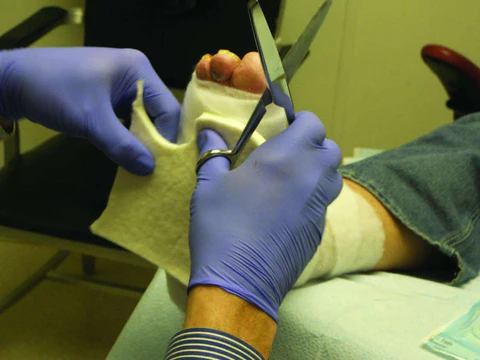
Diabetes can slow wound healing and increase the risk of infection, particularly when an injury affects the feet or lower legs. Professional diabetic wound care may be necessary when a wound does not improve, becomes increasingly painful, or shows signs of infection. Here is more information on when to get help for diabetic wounds:
Checking for New Wounds
Every new wound deserves attention, and early checks give you a clear starting point. Look at the size, depth, and color of the injury, and note whether the surrounding skin feels warm or looks red. Clean your hands first, then examine the area in good light to see fine details. Keeping a written record of what you find helps you track changes over the following days.
You may not always feel a foot injury, so daily inspection becomes a helpful diabetic wound care habit. Use a mirror to view the bottom of your feet, or ask a family member for help when you cannot see clearly. If you notice a wound you cannot explain, a quick call to your care team is a key step.
Recognizing Signs of Infection
Infection can develop quickly in a foot ulcer, and identifying it early supports prompt treatment. Watch the wound for changes in color, odor, or fluid, and pay attention to how you feel overall. A wound that feels worse instead of better often signals that something has changed beneath the surface. Here are Certain warning signs that suggest that professional care is fundamental:
- Increased redness or swelling: Skin around the wound spreads outward and may appear red.
- Warmth or heat: The area feels noticeably hotter than nearby skin.
- Pus or cloudy drainage: Thick, yellow or green fluid collects at the wound.
- Bad smell: An unpleasant odor rises from the ulcer even after cleaning.
- Fever or chills: Your body temperature rises, which may indicate a more serious infection.
Prompt action can prevent an infection from spreading to deeper tissue and give your care team a chance to adjust your treatment plan.
Identifying Delayed Healing
Wounds in people with diabetes often heal more slowly than expected. A healthy wound usually shrinks over time, and the skin around it looks stable rather than inflamed. When a wound stalls, stays the same size for weeks, or reopens after closing, that pattern points to delayed healing. Several factors can slow the process, and knowing them helps you talk with your provider. Poor circulation limits the blood flow that carries oxygen and nutrients to the wound, while high blood sugar can weaken the body’s repair response. Pressure from shoes or standing may also reopen a healing ulcer.
Seeking Urgent Medical Care
Some situations call for diabetic wound care right away. A wound that suddenly worsens, spreads, or produces heavy drainage needs prompt attention, and delaying can increase the risk of complications. The following signs suggest you should seek urgent help:
- Black or dark tissue: Skin around or inside the wound turns dark, which may point to dying tissue.
- Spreading red streaks: Lines extend from the wound toward the ankle or leg.
- High fever: A temperature that climbs quickly, often paired with chills or confusion.
- Numbness with swelling: The foot swells while feeling colder or more numb than usual.
- Uncontrolled drainage: Fluid soaks through dressings faster than you can change them.
Prompt treatment protects the foot and gives specialists the chance to manage the wound before it progresses.
Schedule Your Diabetic Wound Care Appointment
Careful diabetic wound care starts with checking new wounds, watching for infection, and recognizing when healing stalls. Knowing the difference between a scheduled visit and an urgent situation helps you respond at the right moment. Contact a qualified wound care specialist near you to schedule your diabetic wound care appointment today.
- How To Prepare for Your Joint Injection Appointment
- Benefits of Using Invisalign Over Braces
- Why Medical AI Needs Diverse, Ethically Sourced Medical Imaging Data (and How to Get It)
- Sewer Backup Cleanup Companies: A Homeowner’s Guide for Emergencies
- The Role of Family Dentistry in Maintaining Oral Health




