
Sponsored article
The market for functional products has expanded significantly as consumers look for new ways to incorporate energy, focus and wellness-related products into their daily routines. Alongside traditional supplements, energy drinks and capsules, a different format is gaining attention: nootropic pouches.
These compact oral products are designed around functional ingredients rather than nicotine or tobacco. Depending on the formula, they may contain caffeine, amino acids, botanical extracts or other compounds commonly associated with cognitive performance and alertness.
Their appeal is connected to convenience, portability and the possibility of combining several ingredients in a pre-portioned format. However, the category is still developing, and products can differ considerably in their composition and intended use.
Understanding how nootropic pouches are formulated, what ingredients they may contain and how to evaluate product claims is essential for consumers navigating this emerging market.
Quick Answer
Nootropic pouches are small oral sachets formulated with ingredients marketed or studied in connection with alertness, attention or cognitive function. They are typically placed between the upper lip and gum and are available in different formulations.
Some products contain caffeine and other ingredients commonly found in focus supplements, while others use botanical extracts or non-stimulant compounds. Their effectiveness depends on the individual ingredients, quantities, formulation and available scientific evidence.
The term nootropic does not guarantee a particular result. Consumers should evaluate the actual formula rather than relying on product positioning alone.
Key Facts
- Nootropic pouches are part of the wider functional pouch market.
- Formulations may include caffeine, L-theanine, L-tyrosine, choline-related compounds and botanical ingredients.
- Not every nootropic pouch contains caffeine.
- Ingredient quantities are more informative than broad marketing descriptions.
- Research on individual ingredients does not automatically prove the effectiveness of a finished product.
- Transparency, manufacturing standards and clear product instructions are important when comparing brands.
What Are Nootropic Pouches?
Nootropic pouches are compact, pre-portioned products designed to be placed between the gum and upper lip. They provide an alternative format for consuming selected functional ingredients without swallowing a traditional capsule or preparing a beverage.
The term nootropic is generally used in connection with substances that are marketed or researched for their potential relationship with cognitive functions such as attention, memory and mental performance. However, the category covers a wide range of ingredients and formulations.
Unlike traditional nicotine pouches, nootropic products are designed around ingredients other than nicotine. Depending on the manufacturer, they may contain caffeine, amino acids, vitamins or botanical extracts.
The format is one of the main characteristics that distinguishes these products from conventional supplements. A pouch is portable, pre-portioned and does not require water or preparation. This may appeal to people who prefer compact products that can be carried throughout the day.
Nevertheless, the delivery format does not automatically make a product more effective than a capsule, tablet or drink. Claims about absorption speed or bioavailability need to be supported by evidence relating to the specific formulation.
It is also important to distinguish between nootropic pouches and products that simply use focus-related language in their marketing. The ingredients and their amounts determine what a product actually contains.
Why Is the Nootropic Pouch Category Growing?
The development of nootropic pouches reflects several broader trends in the functional supplement market.
Demand for convenient formats
Consumers are familiar with capsules, tablets, powders and ready-to-drink products. Pouches introduce another option that does not require mixing or swallowing a conventional supplement.
Their small size makes them easy to carry, while individual portions can make serving information easier to understand.
Interest in focus and productivity
Many people are interested in products associated with concentration, alertness and demanding daily routines. This has contributed to the visibility of supplements containing ingredients such as caffeine, L-theanine and other compounds studied in relation to cognitive performance.
Nootropic pouches bring some of these ingredients into a different product format.
Expansion beyond traditional nicotine products
The pouch format has historically been associated with nicotine products in many markets. The development of functional alternatives has introduced different product concepts, including caffeine-based and stimulant-free formulations.
This has helped create a broader category in which consumers can compare products with different purposes and ingredient profiles.
Product differentiation
Manufacturers can differentiate their products through flavour, serving size, ingredient combinations, packaging and transparency. Some focus on energy-oriented formulas, while others position products around calm or non-stimulant functional ingredients.
As the market becomes more competitive, clear product information and consistent quality may become increasingly important factors.
Common Ingredients Found in Nootropic Pouches
Nootropic pouches can contain a variety of ingredients. The exact formulation depends on the manufacturer and the intended purpose of the product.
The following ingredients are commonly encountered in the wider nootropic and functional supplement market.
Caffeine
Caffeine is one of the most familiar ingredients in products designed around alertness and energy. It is naturally present in coffee and tea and is also used in energy drinks and supplements.
Caffeine can temporarily increase alertness and reduce the perception of tiredness. However, its effects depend on the amount consumed, individual sensitivity and total daily intake.
Consumers should check the caffeine content per pouch and consider other sources such as coffee, tea, energy drinks and pre-workout products. Excessive intake can contribute to restlessness, anxiety, palpitations and sleep disruption.
L-theanine
L-theanine is an amino acid naturally found in tea. It is frequently included in supplement formulas, sometimes alongside caffeine.
Research has investigated combinations of L-theanine and caffeine in relation to attention and certain aspects of cognitive performance. However, results from studies using particular doses should not automatically be applied to every product containing these ingredients.
L-tyrosine
L-tyrosine is an amino acid involved in the production of neurotransmitters, including dopamine and norepinephrine.
It appears in some supplements marketed for focus and mental performance. Research has examined its potential relevance under demanding or stressful conditions, but this does not establish that every product containing L-tyrosine will improve concentration in everyday situations.
Alpha-GPC and other choline-related ingredients
Alpha-GPC is a choline-containing compound used in some supplements marketed for cognitive support. Choline is involved in several physiological processes, including the production of acetylcholine, a neurotransmitter associated with memory and learning.
The presence of Alpha-GPC in a pouch does not by itself demonstrate a measurable improvement in cognitive performance. The quantity, formulation and available evidence all matter.
Botanical extracts
Some functional products include botanical ingredients such as ginseng or other plant extracts. These ingredients may be marketed around energy, stress management or general wellness.
Botanical extracts can differ in their composition and concentration. Consumers should check which plant is used, the part of the plant, the extract specification and the amount included in each serving.
B vitamins
Vitamins B6 and B12 are involved in normal energy metabolism and nervous system function. They appear in many supplement formulations.
However, supporting normal physiological functions is not the same as demonstrating that additional supplementation will improve focus in someone who already has adequate vitamin intake.
Different Types of Functional Pouches
Not every functional pouch is designed for the same purpose. The market includes several broad product types, each with a different ingredient approach.
Product Type | Typical Formulation | Main Positioning |
Energy pouches | Caffeine and flavouring ingredients | Alertness and energy |
Focus pouches | Caffeine, amino acids or other selected compounds | Focus-oriented routines |
Nootropic pouches | Combinations of ingredients associated with cognitive function | Cognitive support positioning |
Stimulant-free pouches | Non-caffeine ingredients or botanical components | Alternatives to conventional stimulant products |
Calm-oriented pouches | Ingredients such as L-theanine or selected botanical extracts | Relaxation and winding down |
These categories can overlap. For example, a focus pouch may also be a caffeine pouch, while a nootropic formula may include both stimulant and non-stimulant ingredients.
The category name should therefore be treated as a starting point rather than a complete description of a product.
Consumers should compare the individual ingredients, their quantities and the manufacturer’s intended use before making a decision.
Nootropic Pouches vs Traditional Supplements
Traditional nootropic supplements are usually available as capsules, tablets, powders or liquids. Functional pouches introduce another delivery format, but the basic principles of evaluating the ingredients remain the same.
Consideration | Traditional Supplements | Nootropic Pouches |
Format | Capsules, tablets, powders or liquids | Small oral sachets |
Preparation | May require water or mixing | Generally ready to use |
Portability | Depends on packaging | Usually compact |
Serving information | Per capsule, tablet or scoop | Usually per pouch |
Ingredient combinations | Varies by product | Varies by product |
Evidence | Depends on ingredients and formulation | Depends on ingredients and formulation |
The main practical difference is how the product is used. A capsule is generally swallowed, while a pouch is placed inside the mouth.
However, consumers should be cautious about claims that pouches necessarily deliver ingredients faster or more efficiently. Absorption depends on the substance, its formulation and the route of administration. A different format alone does not prove better bioavailability.
Another important factor is serving size. A pouch may contain a different amount of an ingredient than a capsule or scoop of powder. Comparing products requires looking at the actual quantities rather than the number of servings or the size of the package.
What Makes a Nootropic Pouch Formula Worth Evaluating?
As more brands enter the market, product evaluation becomes increasingly important. Attractive packaging and broad claims about focus or productivity are not enough to establish quality.
Several factors can help consumers compare different formulations.
1. Transparent ingredient quantities
A clear label should identify the active ingredients and, where applicable, their individual amounts. A proprietary blend that only lists a combined total makes it harder to evaluate the formulation.
2. Clearly defined product purpose
Manufacturers should explain whether a product is designed around caffeine, non-stimulant ingredients, energy or another purpose. Broad claims that combine several different benefits can make comparisons difficult.
3. Manufacturing information
Information about manufacturing facilities, quality controls and product testing can help consumers assess how seriously a brand approaches production standards.
Certifications and quality claims should be verifiable. A statement about manufacturing in a certified facility is more useful when the manufacturer provides clear supporting information.
4. Batch testing and documentation
Where available, laboratory reports can provide additional information about ingredient identity, quality and product specifications. Consumers should be able to understand what was tested, which batch the report covers and what the results mean.
5. Appropriate serving information
The product should clearly explain how much is contained in one pouch and how it should be used. This is particularly important when a formula contains caffeine or other active ingredients.
6. Realistic product claims
Claims about concentration, memory or cognitive performance should be supported by relevant evidence. Research into one ingredient does not automatically prove that a finished product produces the same effects.
7. Relevant warnings
Consumers should be able to find information about ingredients that may not be appropriate for everyone. People who are pregnant or breastfeeding, take medication or have existing health conditions should consult a healthcare professional before using products containing active ingredients.
Quality, Transparency and the Future of the Market
As the functional pouch category develops, product quality and transparency are likely to become important ways for brands to differentiate themselves.
Consumers are increasingly familiar with comparing supplement labels and looking for information about ingredient quantities. The same expectations can be applied to nootropic pouches.
A brand that clearly explains its formulations, provides serving information and makes relevant quality documentation available gives consumers more information to evaluate than one relying only on promotional language.
Manufacturing consistency is another important consideration. Products should be produced under appropriate quality controls, and claims about testing or certification should be supported by accessible documentation.
The market may also continue to diversify. Some manufacturers may focus on caffeine-based energy products, while others explore stimulant-free formulations or combinations of ingredients associated with focus and relaxation.
This creates opportunities for product innovation, but it also increases the importance of responsible communication. A product positioned around mental performance should not imply that it treats a medical condition or guarantees improved cognitive abilities.
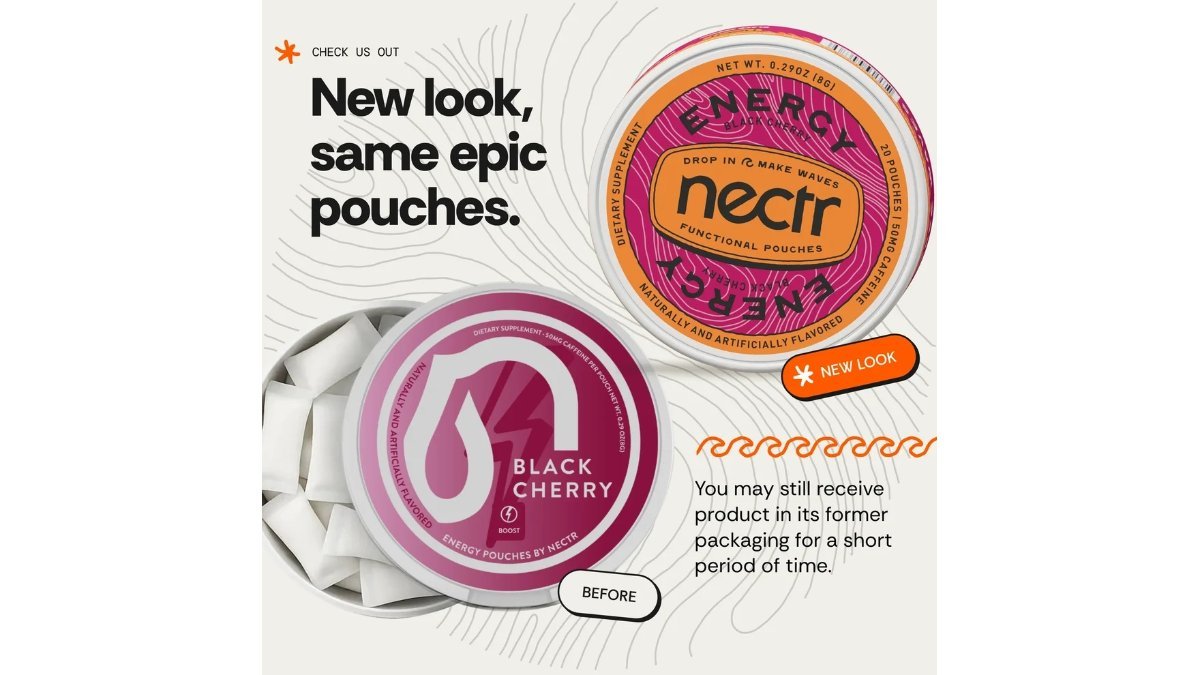
Brands operating in this segment include https://nectr.energy which focuses on functional pouch products. Its presence in the category illustrates the wider development of pouch formats beyond traditional nicotine products.
When evaluating any brand, consumers should examine individual product formulations rather than assuming that all products share the same ingredients or intended effects. Clear labels, transparent quantities and accessible product information remain the most useful starting points.
Challenges Facing the Nootropic Pouch Industry
Despite growing interest, the category faces several challenges that may influence its future development.
Consumer education
The term nootropic is used across a wide range of products. Some consumers may assume that all products with this label have similar ingredients or effects, even though formulations can be very different.
Clear explanations are important to help people understand what they are buying.
Scientific evidence
Research into individual ingredients does not always provide enough information about a finished product. Studies may use different doses, combinations or delivery formats.
Manufacturers should avoid presenting ingredient research as direct proof of the effectiveness of their own formulations unless relevant product-specific evidence is available.
Regulatory considerations
Functional supplements and oral pouch products may be subject to different rules depending on their ingredients, claims and target market. Brands operating internationally need to consider the applicable requirements in each jurisdiction.
Consistency between batches
Maintaining consistent ingredient quantities and product quality is important for consumer confidence. Manufacturing controls and appropriate testing can help address this challenge.
Responsible marketing
Claims about productivity, focus and cognitive performance can easily become exaggerated. Brands should distinguish between the intended positioning of a product and benefits that have been demonstrated through appropriate research.
FAQ: Nootropic Pouches
1. What are nootropic pouches?
Nootropic pouches are small oral sachets formulated with ingredients marketed or studied in connection with alertness, attention or cognitive function. Their ingredients vary by manufacturer and may include caffeine, amino acids, vitamins or botanical extracts.
2. Do nootropic pouches contain nicotine?
Not necessarily. Functional nootropic pouches are generally positioned around ingredients other than nicotine, but consumers should always check the label and product information. Similar packaging does not mean that two products contain the same active ingredients.
3. Are nootropic pouches the same as focus pouches?
The terms overlap, but they are not always identical. Focus pouches are generally positioned around concentration or alertness, while nootropic pouches may use a wider range of ingredients associated with cognitive functions. The actual formulation is more important than the category name.
4. Do nootropic pouches always contain caffeine?
No. Some products contain caffeine, while others use non-caffeine ingredients or botanical extracts. Consumers should check the ingredient list and caffeine amount per serving.
5. What should consumers look for when choosing a nootropic pouch?
Important factors include transparent ingredient quantities, clear serving instructions, manufacturing information, available testing documentation and realistic product claims. Consumers should also consider personal sensitivity to active ingredients and seek professional advice when appropriate.
Final Thoughts
Nootropic pouches represent an emerging segment of the wider functional supplement market. Their compact format and variety of formulations have introduced another option for consumers interested in products positioned around energy, focus and cognitive support.
However, the category is diverse, and products should not be treated as interchangeable. Ingredients, quantities, manufacturing standards and intended uses can vary significantly.
For consumers, the most reliable approach is to look beyond packaging and marketing language. Transparent ingredient information, appropriate product documentation and realistic claims provide a stronger basis for comparison.
As the market continues to develop, brands that prioritise clarity, consistency and responsible communication may be better positioned to build long-term consumer trust.
- How Leg Compression Massage Supports Post-Workout Relaxation
- International logistics for fertility programmes – ARK.CRYO
- The Growing Market for Nootropic Pouches: Ingredients, Innovation and Consumer Trends
- Smart Charger Installation for a New Electric Vehicle
- The Role of Sports Medicine in Injury Prevention for Athletes