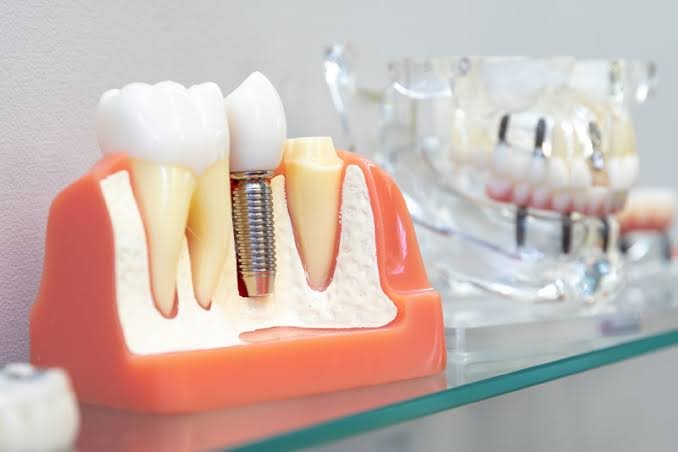
Dental Implants replace missing teeth with titanium posts that act as artificial tooth roots. A crown attaches to each post through a connector called an abutment, restoring the appearance and function of a natural tooth. Titanium fuses with the jawbone, so implants do not slip or make noise, and the materials do not decay like natural teeth. The process may involve several procedures and take many months.
What Dental Implants Are
Dental Implants are small titanium posts that serve as a foundation for crowns, bridges, and dentures. Each post replaces the root portion of a missing tooth, and an artificial tooth attaches through an abutment. Implants do not rely on neighboring teeth for support. Because titanium fuses with the jawbone after placement, the implant provides solid support for the replacement tooth.
Who Qualifies for Dental Implants
Candidacy depends on the condition of the mouth and jawbone. Patients need healthy tissues in the mouth and enough bone to secure the implant, and those without sufficient bone may need bone grafting before placement. A fully developed jawbone also supports the procedure. People with health conditions that affect bone healing may not qualify, while tobacco use can also affect candidacy. The treatment plan also depends on the number of teeth being replaced and the condition of the jawbone and remaining teeth.
Dental implant surgery is usually an outpatient procedure performed in stages. The process may include removing a damaged tooth, preparing the jawbone through grafting when needed, and placing the implant post. Healing takes time. After placement, the jawbone grows into and joins the surface of the implant, and this process provides a stable base for the artificial tooth.
This connection is called osseointegration. The process can take several months, and much of the overall treatment time involves healing and the growth of new bone. Once osseointegration is complete, the abutment may require a separate procedure. After the abutment is placed, the gums must heal for at least two weeks before the artificial tooth is attached.
Understanding the Risks
Dental implant surgery carries health risks. These risks are usually minor and easily treated when they occur. Infection at the implant site is possible, and nearby teeth or blood vessels can sustain damage. Nerve damage can cause pain, numbness, or tingling in the natural teeth, gums, lips, or chin.
Upper-jaw implants can also cause sinus problems. This risk occurs when an implant extends into a sinus cavity, and treatment may be needed if a problem develops. After surgery, swelling, bruising, pain, and minor bleeding can occur. Pain medicine or antibiotics may also be needed.
Caring for Your Implants
Dental implants require regular care. Patients keep their implants, artificial teeth, and gum tissue clean, and regular dental checkups help monitor their condition. Professional cleanings may also be part of ongoing care. Hard items such as ice and hard candy can break crowns or natural teeth.
Damaging habits can affect dental work. Nail-biting and using teeth to open objects can damage natural teeth or restorations, and teeth grinding can also place repeated force on dental work. Treatment may be needed when teeth grinding affects the mouth. Most dental implants are successful. Sometimes, the bone does not fuse sufficiently with the implant. When this occurs, the implant is removed, and the bone is cleaned before the procedure is attempted again after about three months. Smoking may contribute to implant failure and complications. Regular care supports the health of the implant and surrounding tissues.
Schedule an Implant Consultation
Dental Implants involve several stages, and the full process can take many months from start to finish. The condition of the jawbone and the number of teeth being replaced guide the treatment plan. A dental professional reviews these factors during planning, while the specific procedure depends on the individual situation. An implant consultation provides an opportunity to evaluate the mouth and discuss the available treatment plan.