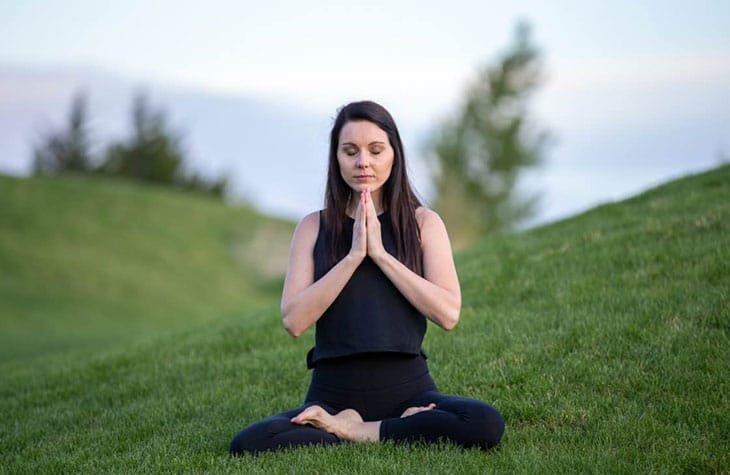

Anxiety shows up as racing thoughts, a tight chest, or restless energy, and it affects many people, often appearing during stressful moments. When your mind fixates on worst-case outcomes, your body reacts as though danger is near. Mindfulness gives you simple tools to interrupt that cycle and return your focus to the present. Here are some techniques that may help relieve feelings of anxiety:
Relaxing Muscles
Anxiety can create physical tension. Progressive muscle relaxation targets that tension directly, and it teaches your body to release stress. When you notice tight shoulders or a clenched jaw, this method helps.
Start at your feet and work upward. Tense each muscle group for five seconds, and then let it relax fully. Since you move through the whole body, you release tension you may not notice.
Breathing Deeply
Your breath changes when anxiety rises. Deep breathing slows your heart rate, and it signals your body to calm down. When you focus on slow inhales and exhales, your attention may shift away from anxious thoughts.
Try a paced pattern to steady yourself. Breathe in for four counts, and hold that breath for four counts. Since this rhythm is designed to engage your nervous system, it helps ground you.
Practice this method a few times a day. Short sessions build the habit, and repetition makes the technique feel natural. When stress spikes, you already know what to do.
Grounding Techniques
Grounding pulls your mind back to your surroundings. It uses your senses, and it works quickly during panic. When anxiety scatters your focus, these methods anchor you.
One popular approach is the 5-4-3-2-1 method:
- Name five things you see
- Notice four things you feel
- Listen for three sounds
- Identify two smells
- Focus on one taste
This exercise takes about a minute. It redirects your attention, and it may reduce the pull of anxious thoughts. Since you engage each sense, your mind stays occupied with the present. You can practice this technique anywhere, making it a versatile tool for managing anxiety in different situations.
Reframing Unhelpful Thoughts
Anxious thinking distorts reality. Reframing helps you spot those distortions, and it replaces them with balanced statements. When you catch a spiraling thought, you pause and question it.
Ask yourself a few direct questions:
- Is this thought based on facts?
- What evidence contradicts it?
- What would I tell a friend?
This process takes practice. Your first attempts may feel awkward, and that reaction is normal. Since you repeat the steps often, the habit grows stronger over time.
Write down recurring thoughts to track patterns. Journaling reveals triggers, and it shows how your mind reacts under stress. When you review your notes, you learn which situations need extra attention. Some people look for additional support beyond daily techniques.
Try Ketamine Therapy for Anxiety
Mindfulness offers steady, everyday support for anxiety, and these techniques give you practical tools you use anywhere. These methods take practice, and consistency shapes the results you notice. Ketamine therapy is one clinical option, and a licensed provider reviews your history first. Talk with a qualified provider to learn more. Schedule a consultation today, and ask whether ketamine therapy fits your situation.
- Understanding the Role of Pediatric Orthopedic Specialists in Children’s Health
- Navigating the Process of STD Testing
- When Should You See an Orthopedic Specialist for Hand Pain?
- Understanding the Different Types of Chemical Peels and Their Uses
- The Science of Skin Elasticity: Unlocking Youthful Texture with Bioactive Peptide Complexes