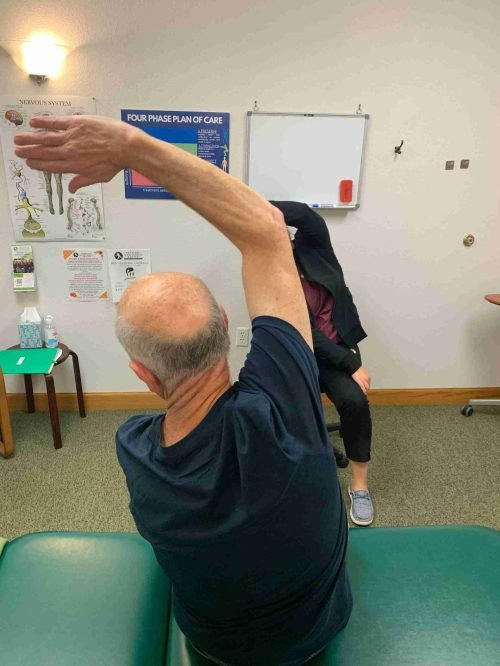
Shoulder pain affects daily tasks like lifting, reaching, and sleeping. The shoulder relies on many small muscles, and weakness in these muscles often leads to strain. When you build strength in the right areas, you support the joint and reduce your risk of injury. Here are four types of strengthening exercises you can add to your routine:
Ground-based Exercises
Ground-based exercises use the floor for support to help address shoulder pain. You lie down, so your spine stays stable while your shoulders do the work. This position limits extra strain, and it helps you focus on form. Beginners typically start here because the movements feel controlled.
Try a floor angel to activate your upper back. Lie on your back with your arms out, then slide them up and down slowly. Your shoulder blades press into the floor, and this contact guides your movement. Since the floor gives feedback, you notice when your form slips.
Open Chain Exercises
Open chain exercises move your arm freely through the air. Your hand stays unfixed, so the shoulder muscles control the full path. These movements target the rotator cuff directly. You gain control over the small stabilizing muscles that protect the joint.
These are three open-chain movements to start with:
- Repeated arm raises to the front
- Lateral raises to the side
- External rotations with a light weight
Keep the weight light at first. You move slowly, and this pace teaches your muscles to stabilize. Since open-chain work isolates the shoulder, you feel each rep clearly. Add reps only when the motion stays smooth.
Repeated Resistance Band Pulls
Resistance bands add steady tension across the full range of motion. You hold the band with both hands, and the pull increases as you stretch it. This constant load challenges your muscles without heavy weights. Many people keep a band at home for quick sessions.
Anchor the band at chest height for rows. Pull your elbows back, squeeze your shoulder blades, then release slowly. The band resists your return, and this control builds strength on both phases. Since the tension never drops, your muscles stay engaged throughout.
Perform repeated pulls in sets of 10. You rest briefly between sets, and you repeat the cycle three times. When 10 reps may feel easy, you switch to a thicker band. This steady progression keeps the movement effective over time. If your pain lingers or worsens, a professional evaluation gives you clear answers.
Extended Arm Exercises
Extended arm exercises stretch your reach and load the shoulder at length. Your arm straightens fully, so the muscles work through a wide angle. These movements mimic daily actions like reaching a high shelf. Practicing them prepares your shoulder for real tasks. Since the movement is guided, you build strength safely at the end range.
Get Treated for Shoulder Pain
These exercises support stronger shoulders, but they do not replace medical care. A trained provider examines your movement, and they identify the source of your discomfort. Early attention may prevent small problems from growing. Schedule an evaluation with our care team today, and start moving with more confidence.
- What To Expect During Your First Gynecologist Appointment
- How Hiring Plumbing Services in Glendale Prevents Slab Leaks
- How Historic Homeowners Utilize Plumbing Services in Portland to Prevent Winter Pipe Freezes
- The Role of Regular Check-Ups With Your Gynecologist
- Understanding the Benefits of Non-Surgical Spinal Decompression for Chronic Pain Relief