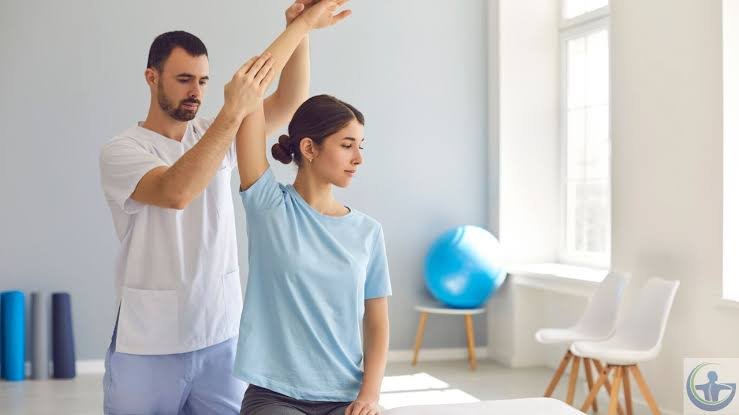
Neck pain causes stiffness, aching, or sharp discomfort that disrupts everyday tasks. For some, the pain stays localized; for others, it spreads into the shoulders or upper back. Exercising the muscles and joints that support neck movement helps relieve tightness and improve range of motion. Here are some exercises to relieve neck pain and support mobility:
Chin Tucks
Chin tucks target the deep stabilizing muscles at the front of your neck, which are more likely to weaken from forward head posture. To begin, sit or stand with your spine upright and your shoulders relaxed at your sides. Look straight ahead. Gently draw your chin straight back, as though you are trying to make a “double chin.” Do not tilt your head up or down; the motion is horizontal. Hold for five seconds, then release fully before repeating. Aim for 10 repetitions per set. You may feel a mild stretch along the base of your skull or the back of your neck. Keep each movement small and controlled rather than forcing the chin as far back as possible. Two sets per session is a reasonable starting point, with a short rest between sets.
Head Tilts
Head tilts address the muscles running along the sides of your neck, particularly the upper trapezius and scalene group. For this exercise:
- Sit with both feet flat on the floor and your back straight.
- Slowly lower your right ear toward your right shoulder, stopping when you feel a stretch on the left side of your neck. Do not lift the shoulder to meet your head, but keep it pressed down.
- Hold the position for 5 to 10 seconds, breathing steadily.
- Return your head to center, pause briefly, then repeat on the left side.
Complete three tilts per side. For a slightly deeper stretch, place the hand on the same side as the tilt on top of your head. The added weight of your hand alone increases the stretch without pulling. Move through each tilt slowly, and stop immediately if you feel sharp or radiating pain rather than a stretching sensation. Head tilts are well-suited to performing at a desk or during a break from seated work.
Neck and Shoulder Rolls
Neck and shoulder rolls loosen the muscles connecting your neck to your upper back and shoulders; these areas often carry tension and neck pain after prolonged sitting. Start seated or standing with your arms relaxed at your sides. Lift your shoulders upward toward your ears, then draw them backward, and let them drop down in one smooth, continuous circle. Repeat a few times, keeping the movement fluid.
Once your shoulders feel looser, shift attention to the neck. Drop your chin gently toward your chest. Rotate your head slowly in a half-circle from one shoulder to the other, pausing at the center and at each side. Perform three passes in each direction. Pace matters here; rushing the movement reduces its effectiveness and increases the risk of strain. Stop at any point where the motion produces pain rather than mild tension. Neck and shoulder rolls work well as a warm-up before other neck exercises or as a stand-alone reset during the day.
Work With a Neck Pain Specialist
Neck exercises provide a general framework, but they are not a substitute for a professional evaluation of your condition. A neck pain specialist examines your posture, movement patterns, and symptom history to identify the underlying cause. This allows them to determine whether additional treatment is needed alongside exercise. If your pain lasts several weeks, intensifies, or travels into your arms or hands, contact a qualified provider promptly. A structured, personalized plan addresses your needs more precisely than a general routine. Schedule a consultation with a neck pain specialist today.
- Choosing a Heart Blockage Treatment Hospital: Emergency Care, Procedures and Long-Term Support
- Exploring the Benefits of Family Dentistry for All Ages
- The Role of TMS Therapy in Managing Anxiety Disorders
- The Role of Foot and Ankle Specialists in Sports Injury Recovery
- What To Expect During Your First Gynecologist Appointment